
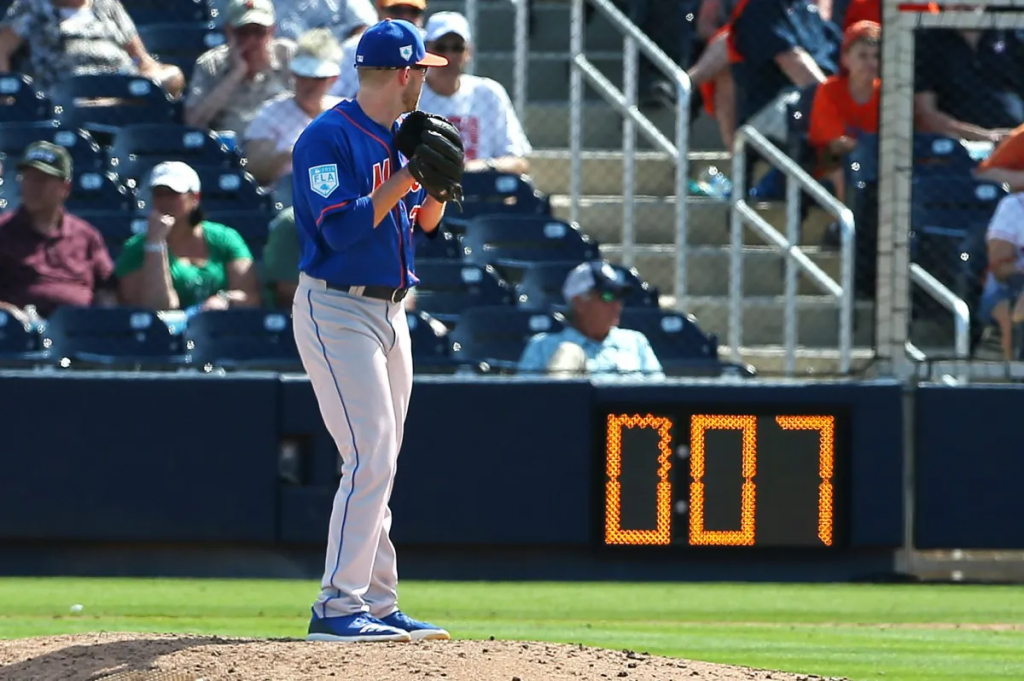
The game has changed. The MLB introduced the Pitch Clock in 2023 in order to speed up the pace of play.
The Clock: Pitchers must throw the pitch within 15 seconds with bases empty, 18 seconds with runners on base and 30 seconds between batters
The Pitcher: Must start motion before clock hits zero (violation = automatic ball)
The Batter: Must be ready in the box by the 8-second mark (violation = automatic strike)
The Big Change: Average game time was cut down by 24 minutes (to a 2:40 hour game).
How does this affect batting & pitching? What do the stats say?
Offensive Boom: Did Batting Benefit? The Answer: Not So Much
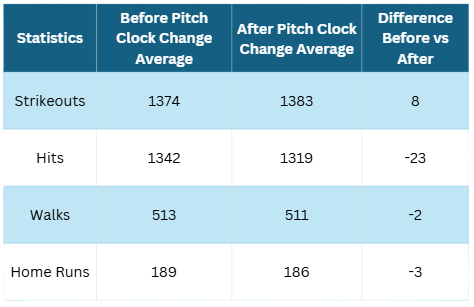
In the last 3 seasons since the pitch clock’s implementation, the data shows minimal changes showing 8 fewer strikeouts, 2 more walks, 3 more home runs, and a modest increase of 23 hits.
Defensive Bust: Pitching Disadvantage? The Answer: Not Exactly
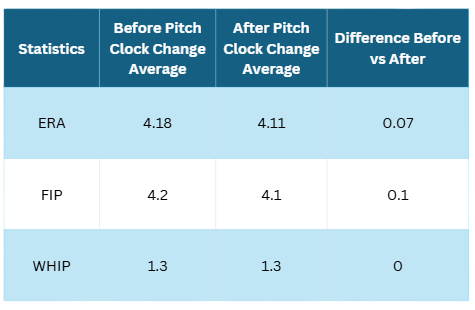
Just like the hitting numbers, pitching statistics show no major outliers. If anything, the pitch clock gave pitchers a slight edge: ERA improved by 0.07 and FIP improved by 0.1, while WHIP remained the same.
Takeaways
No outliers in data after pitch clock installation.
The data shows minimal changes. The average seasonal hit count decreased by 23, a change within the normal range of seasonal fluctuation. Contrary to expectations that the pitch clock would advantage hitters, key pitching metrics like ERA and FIP actually showed a minor, statistically ordinary improvement for pitchers.
A win for the MLB
The pitch clock is a clear success for the MLB. It has effectively reduced game time without producing any major statistical shift. Credit is due for the good work of the league’s organizers. I expect this to be a permanent long-term change for the sport.